

3 things I ALMOST learned the HARD WAY as an indie author so...
you don't have to!


When you’re an indie author, everything in publishing is a learning curve. Here are three curveballs I dodged and learned from.
Curveball #1 - Reading my contracts (and learning that I should have a lawyer do it)
I generally read over my own short story contracts. They tend to be straightforward. How ridiculous can a contract get that isn’t for a full novel? Umm…
In 2025, Writer Beware and File 770 showcased issues with short story contracts from Must Read Magazines, home of the biggest genre heavy hitters - Asimov’s Science Fiction, Analog Science Fiction and Fact, The Magazine of Fantasy & Science Fiction, Alfred Hitchcock Mystery Magazine, and Ellery Queen Mystery Magazine.
In a nutshell, language was added regarding moral rights and merchandising rights, among other things, that gave authors heartburn. The newsletter, Writer Beware, did a deep dive on the issues, making it an ongoing conversation in the mystery and SFF communities for most of last year.
I suggest signing up for Writer Beware. It’s free. This newsletter is a writer’s best friend. Each week, you are alerted to any dastardly deeds occurring in the publishing world so you can stay safe and successful.
I signed an Ellery Queen Mystery Magazine contract in 2024, before the changes, so these clauses did not impact me. But if the concerning language had been included, I doubt I would have identified it as concerning.
If you are an indie writer and you can afford it, join an organization that offers legal reviews by lawyers with an expertise in literary contracts as part of their benefits. I belong to the Authors Guild. Their lawyers reviewed my book contract for THINGS ARE AS THEY SHOULD BE AND OTHER WORDS TO DIE FOR, releasing April 21. My publisher, Uncomfortably Dark Horror, made the contract changes I asked for based on that review. It was a smooth process.

Curveball #2 - Having to toot my own PR horn (and learning to reuse my existing skill set)
With or without an agent or a traditional publisher, you WILL have to do some form of book promotion YOURSELF. That is doubly evident for indie authors.
I ran a PR and events firm for ten years, so I have a background in marketing and promotion. But, since I don’t have an agent, I know I will need to roll up my sleeves and dust off my long-lost skill set for the upcoming book.
When pitching an ARC to prospective reviewers, you won’t miraculously see a horde of reviewers rushing to showcase your work. That’s just facts.
But here is a little bit about how the math is mathing on my journey to capture the hearts and minds of blog reviewers.
Realistically, 10% engagement is a normal expectation when pitching to reviewers. You could see engagement as high as 15-20% if you have a particularly strong concept or big name blurb attached to your book. I’m personally seeing 20% engagement because I have a big name blurb (I’ll save those details for another time). Think of the numbers this way based on the 20% end of the scale:
30 pitches sent should get you…
5-6 ARC requests which in turn could have…
3-4 reviewers actually read it and yield about…
2-3 post reviews
That might not seem like a lot but it’s a numbers game. However, once you get traction with a few posts or reviews, it can lead to organic requests. What does that mean, you ask? Well…
I have two podcasts coming. I didn’t pitch either one of them.
I booked The Dark Mind podcast after hearing fellow writer, Tamika Thompson’s interview for her upcoming book, THE CURSE OF HESTER GARDENS, and posting a comment on the show’s Facebook page. Tamika recommended me for an interview in response to the comment. That was it. I got an interview.
The second podcast, the Christopher Chambers Noir podcast, was due to my posting about my Sisters in Crime Writers’ Podcast session. Christopher saw the post and asked if I would be interested in his podcast.
Generating additional PR based on soft engagement (or by piggybacking off pitched placements) can happen, but is less likely if you are not sincere in your interactions. I liked Tamika’s podcast interview very much, so I posted about it. She’s a wonderful interview subject. SinC did a great job of tagging and reposting my interview. Every bit of amplification helps.
The lesson you should learn from this…nurture your writing community! Don’t treat your writing career as transactional! Thank you for attending my TED Talk.

Curveball #3 - Understanding piracy risks (and learning I can’t eliminate them)
Am I being irrational to believe that my ARC on NetGalley or StoryOrigin is ripe for downloading and stealing? Of course it is, but…I need ARC readers. What’s a girl (okay, grown woman) to do?
How exactly do I find ARC readers and avoid having my book pirated? There are no easy answers here. All you can do is accept the risk, then do this…
Join the many Facebook groups, based on your genre, that specialize in reading ARCs. Every group I’ve encountered has ground rules for making sure a person is a person (and not a shadowy hidden figure to the best of their ability), not sharing the work, and for reciprocity in the review process i.e., you have to review work to submit your own, in some cases. My publisher also has a robust community of willing and ready vetted ARC reviewers and bloggers, which is a HUGE plus.
There is no way to prevent pirating. C’est la vie. I post reviews for about 25-50 books (ARCs, purchased books, and library checkouts) a year. I enjoy doing it, and it’s clear the community I belong to also enjoys it. I’m thrilled so many folks proactively asked to review my upcoming book. Every review is so meaningful, and I appreciate every one of them. So…
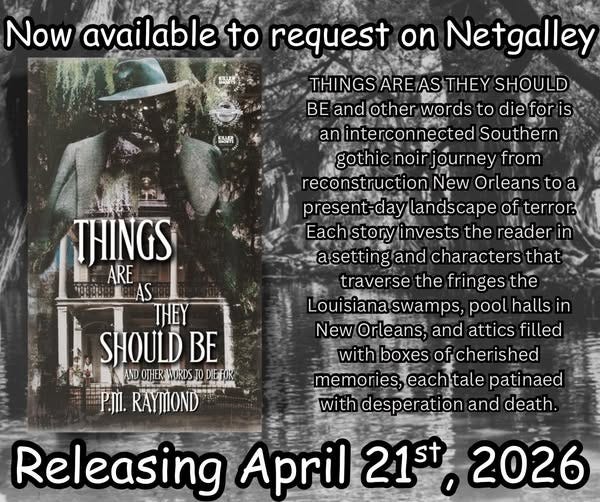
Want a chance at an early copy of THINGS ARE AS THEY SHOULD BE AND OTHER WORDS TO DIE FOR? Well, do I have a link for you! Go to NetGalley. Request the book by February 28, read it, and submit your review by March 31. A winner will be announced before the book releases on April 21! Please and THANK YOU! ❤️
I hope some of my curveballs can help you navigate your indie publishing journey. What learning tidbits have you learned on your publishing adventures? I’d love to hear about it.
P.M. Raymond
Writer of horror and crime noir. Observer of the world
That 10% engagement is a heartbreaker but oh so very true.